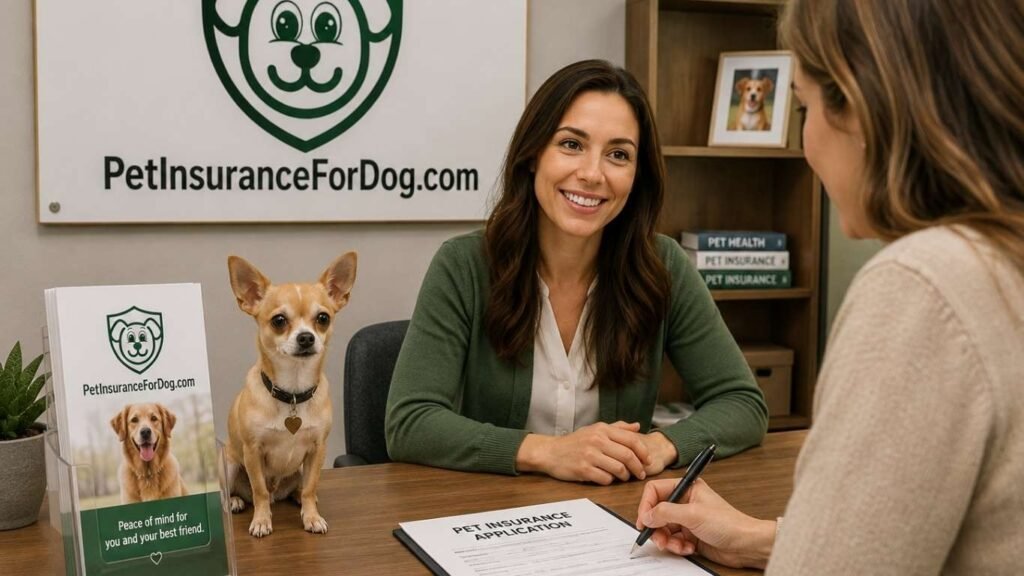
Pet Insurance for Dogs – Dog Insurance Agent
Shopping for Pet Insurance for Dogs can feel easy for the first few minutes. You enter your dog’s name, age, breed, and ZIP code, then a handful of plans appear on the screen. At first glance, it looks like a simple choice. Then the numbers and policy terms begin to stack up: deductible, reimbursement rate, annual limit, waiting period, exclusions, wellness add-ons, hereditary condition rules, and claim requirements. For many dog owners, that is the moment when one practical question comes up: should you work with an insurance agent, or is it better to buy Dog Insurance directly online?
The answer depends on your comfort level, your dog’s health history, and how much guidance you want before choosing a policy. Some owners are confident researchers. They like comparing plans, reading sample policies, and making decisions on their own schedule. Others would rather speak with a person who can explain the fine print and help them avoid mistakes. Both routes can work. What matters most is that you understand what you are buying before your dog needs care.
An agent is not required for most pet insurance purchases, but the right person can still be useful. Dog Insurance may look simple compared with life, health, or homeowners insurance, yet the details can affect your wallet in a very real way. A missed exclusion or misunderstood waiting period can be frustrating later, especially when your dog is already sick or injured. That is why it helps to look carefully at what an agent does, when their support may be worth it, and when direct purchase may be the more practical choice.
What an insurance agent means in Dog Insurance
An insurance agent is a licensed professional who helps people choose and enroll in insurance policies. In traditional insurance markets, agents often help with auto, home, life, or business coverage. In Pet Insurance for Dogs, their role can be smaller and more specialized, but it follows the same basic idea: they help customers understand policy options and make a more informed decision.
In the dog insurance space, an agent may explain how premiums are calculated, compare coverage levels, answer questions about claims, and help you understand whether a plan suits your dog’s age, breed, and lifestyle. Some agents may also assist with applications and documentation. Others may offer limited help after the sale, especially if a claim issue becomes confusing.
Not every agent works the same way. Some represent only one insurance company. These are often called captive agents. They may know one provider’s products very well, but they cannot show you every plan available in the market. Other agents are independent and may compare policies from several insurers. That wider access can be helpful, although it still does not guarantee that every Dog Insurance provider is included.
Captive agents
A captive agent represents one insurance company. If you already trust that insurer or want a detailed explanation of its pet insurance plans, this type of agent can be helpful. They may understand the provider’s claims process, coverage options, billing setup, and add-on features. They may also be able to explain how that company treats issues such as pre-existing conditions, waiting periods, or chronic illness coverage.
The limitation is clear: a captive agent cannot give you a full comparison across the market. If another insurer offers a better plan for your dog, you may not hear about it. That does not mean the agent is being dishonest. It simply means their product shelf is limited.
Independent agents
An independent agent may work with several insurance providers. This can be useful if you want side-by-side comparisons without spending hours gathering quotes yourself. An independent agent may help compare monthly premiums, deductibles, reimbursement percentages, annual limits, exclusions, and available discounts.
Still, independent does not always mean complete. Some pet insurance companies sell only through their own websites. Others may not be part of an agent’s network. Before relying on the advice, ask which insurers the agent can quote and whether any major providers are not included. A transparent answer will help you understand how broad the comparison really is.
Why dog owners consider using an agent
Many people look for an agent because insurance language can feel dry, technical, and sometimes exhausting. Dog owners are not usually shopping for coverage because they enjoy reading policy documents. They are shopping because they want to protect a pet they love. A good agent can turn confusing terms into practical explanations.
For example, an owner may know that a plan reimburses 80% of covered expenses, but not fully understand how the deductible affects the final payment. Another owner may see that illnesses are covered, but miss a rule about waiting periods. Someone else may assume that hereditary conditions are included, only to discover later that the policy handles them differently.
This is where a careful agent can add value. They can slow down the process and ask questions that matter. Is your dog a breed with known orthopedic risks? Has your dog ever been treated for allergies, digestive issues, or skin problems? Do you want help mostly for accidents, or do you want broader illness protection? Are you comfortable paying a higher deductible if it lowers the monthly premium?
Those questions may sound simple, but they can shape the quality of your Dog Insurance decision. A pet insurance policy should match your dog’s real life, not just look attractive on a quote page.
What an agent can do for dog owners
A qualified agent can help dog owners understand policy choices before they enroll. This can be especially useful for first-time pet owners, families with multiple dogs, or anyone who feels uncertain about coverage language. The best agents do not simply sell a plan. They explain the trade-offs behind each option.
An agent may help you compare accident-only coverage against accident and illness coverage. Accident-only plans usually cost less, but they are narrower. They may help if your dog breaks a bone, swallows an object, or gets injured unexpectedly. Accident and illness plans usually cost more, but they may cover eligible conditions such as infections, cancer, allergies, arthritis, digestive problems, and other medical concerns.
An agent can also help explain wellness add-ons. These are optional benefits that may cover routine care such as vaccinations, annual exams, flea prevention, heartworm testing, or dental cleaning. Some dog owners like the predictability of wellness coverage. Others prefer to pay routine expenses directly and use insurance mainly for larger surprises. A good agent should help you weigh both sides without pushing unnecessary extras.
Common ways an agent may help
- Explain deductibles, reimbursement rates, and annual limits in plain language.
- Compare policies from one or more providers, depending on the agent’s access.
- Identify exclusions that may affect your dog’s breed, age, or health history.
- Help you understand waiting periods before coverage begins.
- Walk through application questions and required documentation.
- Clarify whether wellness care, dental illness, prescriptions, or specialist care are included.
- Explain how claims are usually filed and reimbursed.
- Provide support if policy wording or claim responses become confusing.
When using an agent may be especially helpful
Not every dog owner needs an agent, but some situations make professional guidance more useful. The more complicated your dog’s needs are, the more valuable a second set of trained eyes may become.
You are insuring multiple dogs
Families with several dogs often face a more complicated decision. One dog may be young and healthy. Another may be older. A third may belong to a breed with higher medical risk. Buying the same plan for all of them may feel convenient, but it may not always be the best fit.
An agent can help compare whether one provider makes sense for the whole household or whether different coverage levels should be considered. They may also check for multi-pet discounts, billing options, and ways to keep coverage organized. For busy families, this can save time and reduce confusion.
Your dog has a medical history
If your dog has already been treated for a health problem, choosing Pet Insurance for Dogs requires extra care. Most policies exclude pre-existing conditions, but the way insurers define those conditions may vary. Some may treat certain past issues as permanently excluded. Others may reconsider specific curable conditions after a symptom-free period, depending on the policy.
An experienced agent can help explain these differences. They should not promise that a past condition will be covered unless the policy clearly supports it. But they can help you avoid plans that are unlikely to meet your expectations. This is especially important if your dog has recurring allergies , joint problems, digestive issues, ear infections, skin disease, or previous injuries.
Your dog’s breed carries higher health risks
Some breeds are more prone to particular medical concerns. Large breeds may face hip or elbow problems. Dachshunds may be more vulnerable to back issues. French Bulldogs, Pugs, and other flat-faced dogs may experience breathing difficulties. Golden Retrievers may have higher risk for certain cancers or joint conditions. These risks do not mean your dog will definitely become sick, but they should influence your Dog Insurance decision.
An agent familiar with breed-related coverage questions can help you look beyond the monthly premium. The cheapest policy may not be helpful if it excludes the conditions your dog is most likely to face. A slightly more expensive plan may offer stronger long-term value if it covers hereditary or congenital conditions, orthopedic care, diagnostics, and follow-up treatment.
You want someone to explain the fine print
Insurance documents are not light reading. Even careful dog owners can miss important details. A policy may include waiting periods, exclusions, benefit limits, claim deadlines, medical record requirements, or restrictions on certain treatments. It may also treat exam fees, prescriptions, dental illness, or rehabilitation differently from what you expect.
If you prefer to have someone interpret these details, an agent may be helpful. This does not mean you should skip reading the policy yourself. It means you can use the agent’s explanation as a guide while still reviewing the written terms before buying.
You prefer ongoing support
Some dog owners like having a person they can contact after enrollment. If a claim is delayed, denied, or confusing, an agent may help explain what happened and what documents may be needed. Not every agent provides claim support, so ask about this before you commit.
Even when an agent cannot change an insurer’s decision, they may help you understand the reason behind it. Was the claim affected by a waiting period? Did the invoice lack detail? Was the condition considered pre-existing? Did the treatment fall outside the policy? These answers can reduce frustration during an already stressful moment.
Drawbacks of using an insurance agent
Working with an agent can be useful, but it also has limits. The first concern is access. A captive agent can only show you one company’s plans. Even independent agents may not include every pet insurance provider. If you rely only on one agent, you may miss policies that could be a better fit.
Another issue is possible bias. Many agents are paid through commissions from insurers. That does not automatically make their advice unreliable, but it does mean transparency matters. You should ask how the agent is paid and whether they receive different compensation from different providers.
Some agents may charge service fees. Others may not charge the customer directly because they are paid by the insurer. Either arrangement can be acceptable as long as it is disclosed clearly. The problem is not compensation itself. The problem is unclear compensation that leaves you unsure whether the recommendation is based on your dog’s needs or the agent’s incentive.
Using an agent may also add time. Direct online enrollment can be quick. You enter details, compare choices, and buy a plan. An agent-led process may involve calls, emails, document review, and follow-up questions. For some owners, that feels reassuring. For others, it feels like an extra step they do not need.
Buying Dog Insurance directly
Direct purchase is common with Pet Insurance for Dogs. Many providers build their websites for self-guided shopping. You can get a quote, adjust the deductible, select a reimbursement percentage, choose an annual limit, add or remove wellness coverage, and enroll online.
This route works well for dog owners who are comfortable comparing details. It can also be faster. If your dog is young, healthy, and you only need standard accident and illness coverage, direct buying may be enough. You can read reviews, download sample policies, contact customer support, and make the decision on your own timeline.
The challenge is discipline. Buying direct means you must read carefully. A low premium can be tempting, but you need to check what sits behind it. Does the plan cover hereditary conditions? Are exam fees included? How long are the waiting periods? What is excluded? How does reimbursement work after the deductible? What records are needed for claims?
Direct buying can be a smart choice, but only when the owner is willing to do the homework. Dog Insurance is not just a price comparison. It is a coverage comparison.
agent versus direct purchase: key differences
The choice between using an agent and buying direct is less about right or wrong and more about fit. Some owners value personal guidance. Others value speed and control. Either way, the goal is the same: choosing Dog Insurance that protects your pet without creating unnecessary pressure on your budget.
Plan selection
With an agent, plan selection depends on whether the agent is captive or independent. A captive agent may offer deep knowledge of one insurer, while an independent agent may compare several. Buying direct usually means reviewing one provider at a time, unless you use comparison tools or gather quotes manually.
Support
An agent may provide more personal support, especially before enrollment. Direct purchase usually relies on website tools, customer service teams, online chat, email support, or help center articles. Both methods can answer questions, but the experience feels different. An agent offers conversation. Direct purchase offers control.
Convenience
Direct buying is often faster. You can enroll at any hour without scheduling a call. Using an agent may take longer, but the slower pace may help if your dog has a health history or if you feel unsure about policy language.
Cost
Many agents do not charge customers directly, but some may. Direct purchase is usually fee-free, although that does not always mean the premium will be lower. The most important step is to compare the actual policy terms and total cost, not just the purchase method.
Questions to ask a dog insurance agent before you commit
If you decide to work with an agent, ask clear questions before you rely on their recommendation. A professional who understands pet insurance should welcome your questions and answer them directly.
Are you independent or tied to one insurer?
This tells you whether the agent can compare several companies or only one. If they represent one insurer, ask what makes that provider a strong fit for your dog. If they are independent, ask which companies they can quote and whether any major providers are excluded from their comparison.
Do you charge a fee?
Ask whether you will pay a service fee or whether the agent is paid by the insurance company. If there is a fee, ask when it is charged and what service it covers. Clear compensation is a basic sign of professionalism.
How much experience do you have with Pet Insurance for Dogs?
Pet insurance is different from auto, home, and life insurance. A good agent should understand breed risks, waiting periods, exclusions, claim reimbursement, wellness add-ons, and pre-existing condition rules. If the agent rarely handles pet insurance, they may still help, but you should be more cautious and verify details yourself.
Can I review the policy documents before buying?
Never rely only on a sales summary. Ask for the policy documents or a sample policy. The written contract is what matters when you file a claim. A trustworthy agent should encourage you to review it.
What happens if I have a claim problem?
Ask whether the agent helps after enrollment. Some agents may explain claim decisions or help you understand documentation requests. Others may direct you to the insurer’s claims department. Either answer is acceptable as long as you know what to expect.
Signs of a good pet insurance agent
A good agent listens first. They ask about your dog’s age, breed, lifestyle, health history, and your budget before recommending a plan. they explain the trade-offs between cheaper premiums and stronger coverage. They do not pretend that every policy covers everything.
Honesty is one of the clearest signs of quality. If your dog has a past medical condition, a good agent should explain that it may be excluded. If a policy has a waiting period, they should point it out. If a cheaper plan has major gaps, they should say so. Good advice does not always sound like a sales pitch. Sometimes it sounds like a warning.
Patience also matters. Dog owners may need time to understand insurance terms, especially if they are buying coverage for the first time. A reliable agent should explain concepts without making you feel rushed or embarrassed. If they pressure you to buy quickly, avoid specific answers, or dismiss your concerns, that is not a good sign.
Red flags to watch for
Be cautious if an agent promises that a Dog Insurance policy will cover everything. No pet insurance plan does. Be careful if they minimize pre-existing condition rules, waiting periods, or exclusions. These are not minor details. They are central to how the policy works.
Pressure is another warning sign. If an agent tells you that you must buy immediately or discourages you from comparing other options, step back. A responsible insurance decision should make you feel informed, not cornered.
Vague answers about fees or commissions should also raise concern. You have the right to know how the agent is paid. You also have the right to see policy documents before committing. If those requests are treated as inconvenient, consider shopping elsewhere.
Is an agent required for Pet Insurance for Dogs?
No, an agent is not required for most Pet Insurance for Dogs. Many dog owners buy directly from insurers and manage their policies online without trouble. Pet insurance is often designed to be simple enough for direct purchase, especially for young and healthy dogs.
Still, optional does not mean unnecessary. An agent may be helpful if you want more guidance, if your dog has a health history, if you own multiple pets, or if policy language feels overwhelming. The value of an agent depends on whether they help you understand the policy better than you could on your own.
For some owners, the best route is direct purchase. For others, it is guided comparison. What matters is not whether an agent is involved. What matters is whether you know what the policy covers, what it excludes, and how it protects your budget when your dog needs care.
How to decide which option fits your situation
Start with your own comfort level. Are you willing to read policy documents? Do you understand deductibles, reimbursement rates, annual limits, and exclusions? Can you compare multiple providers without feeling overwhelmed? If the answer is yes, buying direct may be practical.
Next, think about your dog. A young mixed-breed dog with no medical history may be easier to insure. A senior dog, a dog with past treatment records, or a breed with known health risks may require more careful comparison. The more complicated your dog’s situation is, the more helpful an agent may become.
Then consider your household budget. If a monthly premium is already a serious stretch, you need to choose carefully. A plan should be affordable enough to keep long term. A policy that lapses because it costs too much will not help when a future claim appears. An agent may help you balance coverage and price, but direct comparison can also work if you review the numbers honestly.
Choosing with care and protecting your long-term finances
An agent can make Dog Insurance easier to understand, but the responsibility still belongs to the owner. Whether you buy through a professional or directly from an insurer, take time to study the policy before enrolling. Look at the deductible, reimbursement percentage, annual limit, waiting period, exclusions, and claim process. Ask how the policy handles hereditary conditions, chronic illness, dental illness, prescription medication, exam fees, and specialist care. Compare more than one option if possible. The best Pet Insurance for Dogs is not always the most expensive plan or the cheapest plan. It is the policy that fits your dog’s needs and your family’s financial reality.
Pet care is part of a bigger financial picture. A sudden veterinary bill can affect emergency savings, debt payments, household expenses, and even long-term goals like retirement planning. Dog ownership brings warmth, companionship, and a kind of loyalty that is hard to measure, but it also requires planning for costs that may arrive without warning. That is why learning about Dog Insurance, with or without an agent, is a practical step toward better financial security. Take time to understand your options before an emergency forces a rushed decision. Ask questions, compare coverage, and keep your dog’s breed, age, lifestyle, and health history in mind. If you want clear guidance before choosing a policy, visit Pet Insurance for Dogs for helpful answers about coverage, costs, claims, and choosing the right plan. The right information can help you protect your dog while keeping your budget steady. Your dog may never know whether you used an agent or bought direct online, but they will benefit from the care that thoughtful planning makes possible. A few careful decisions today can make a difficult day easier tomorrow.